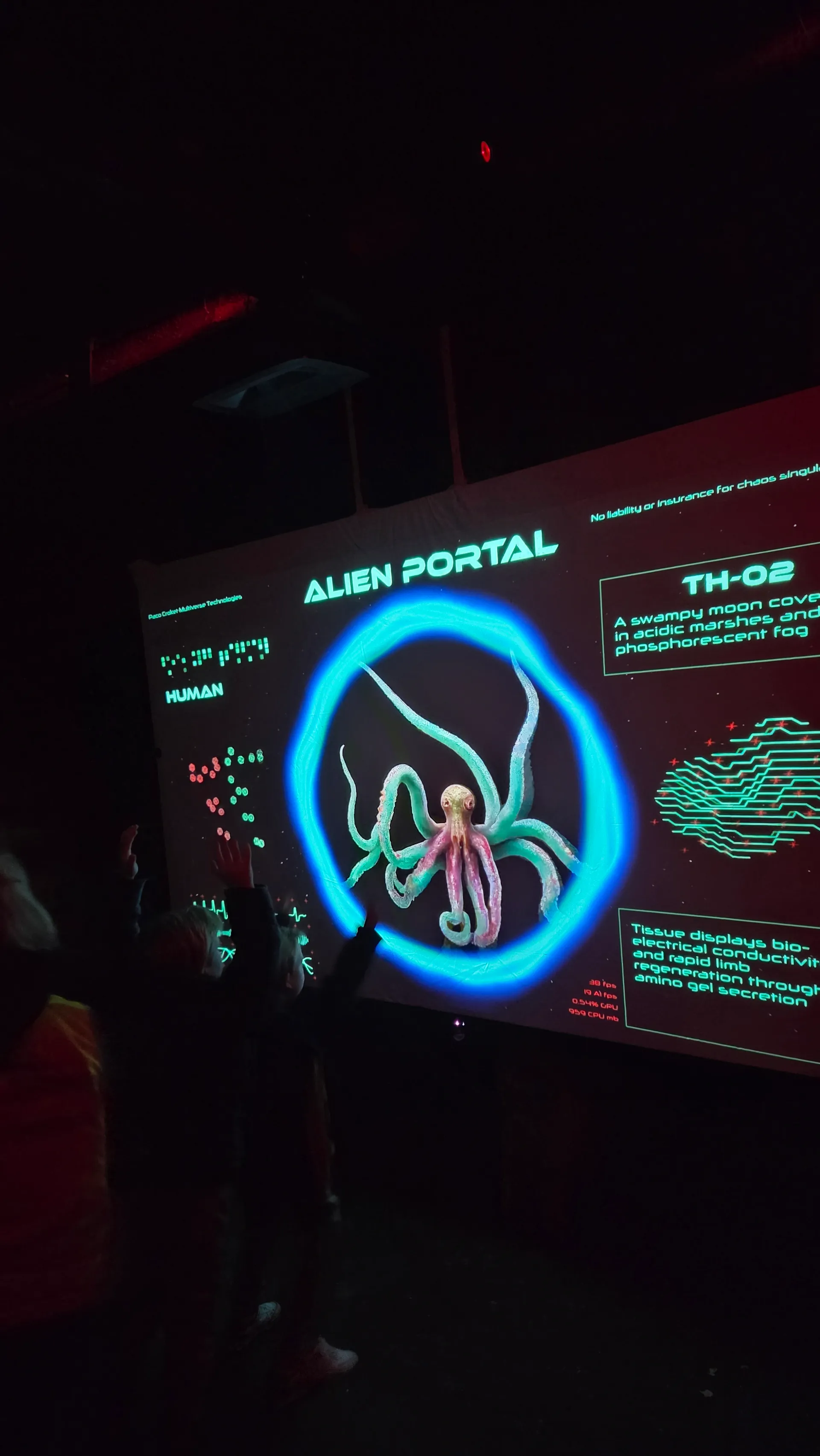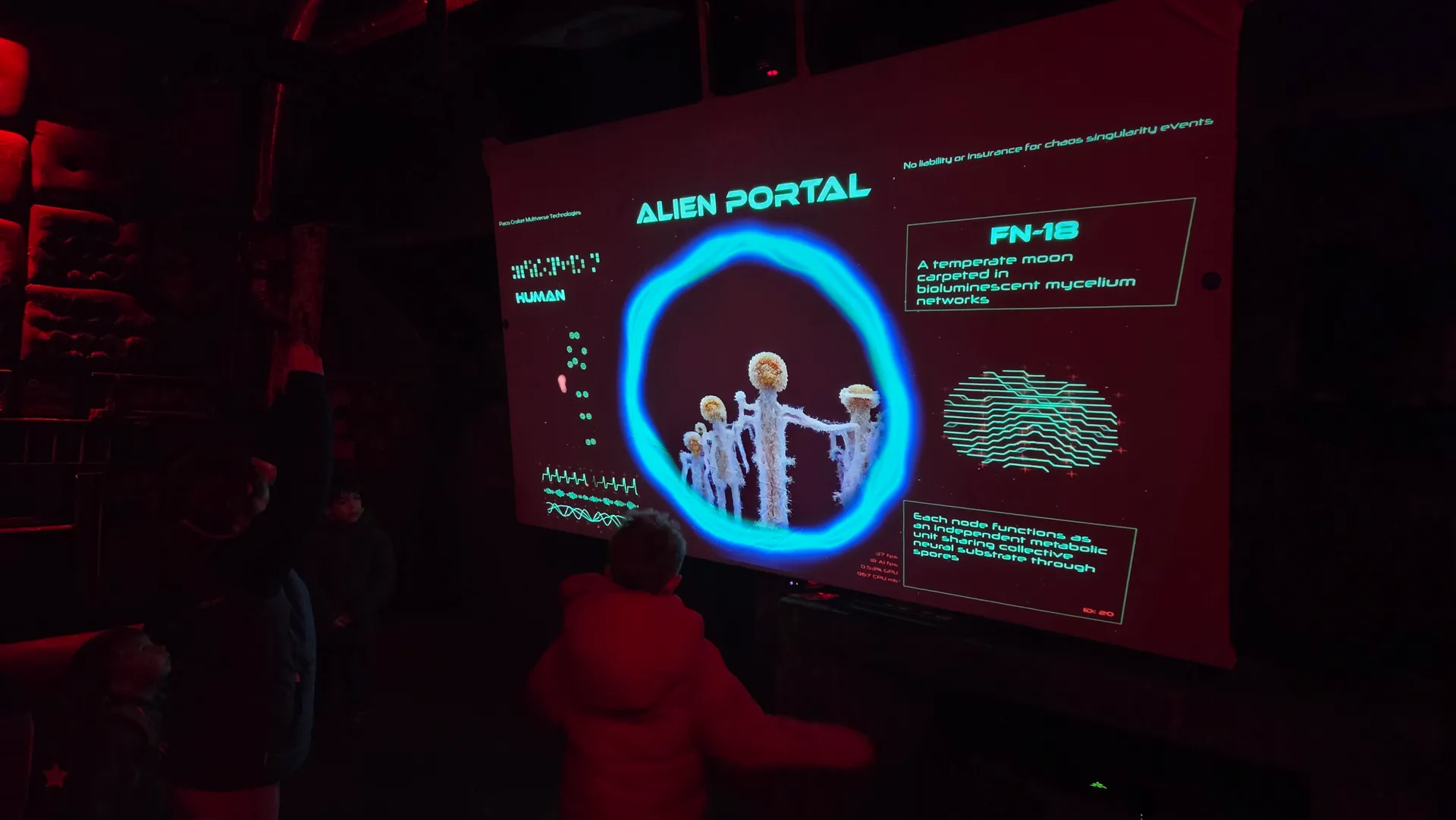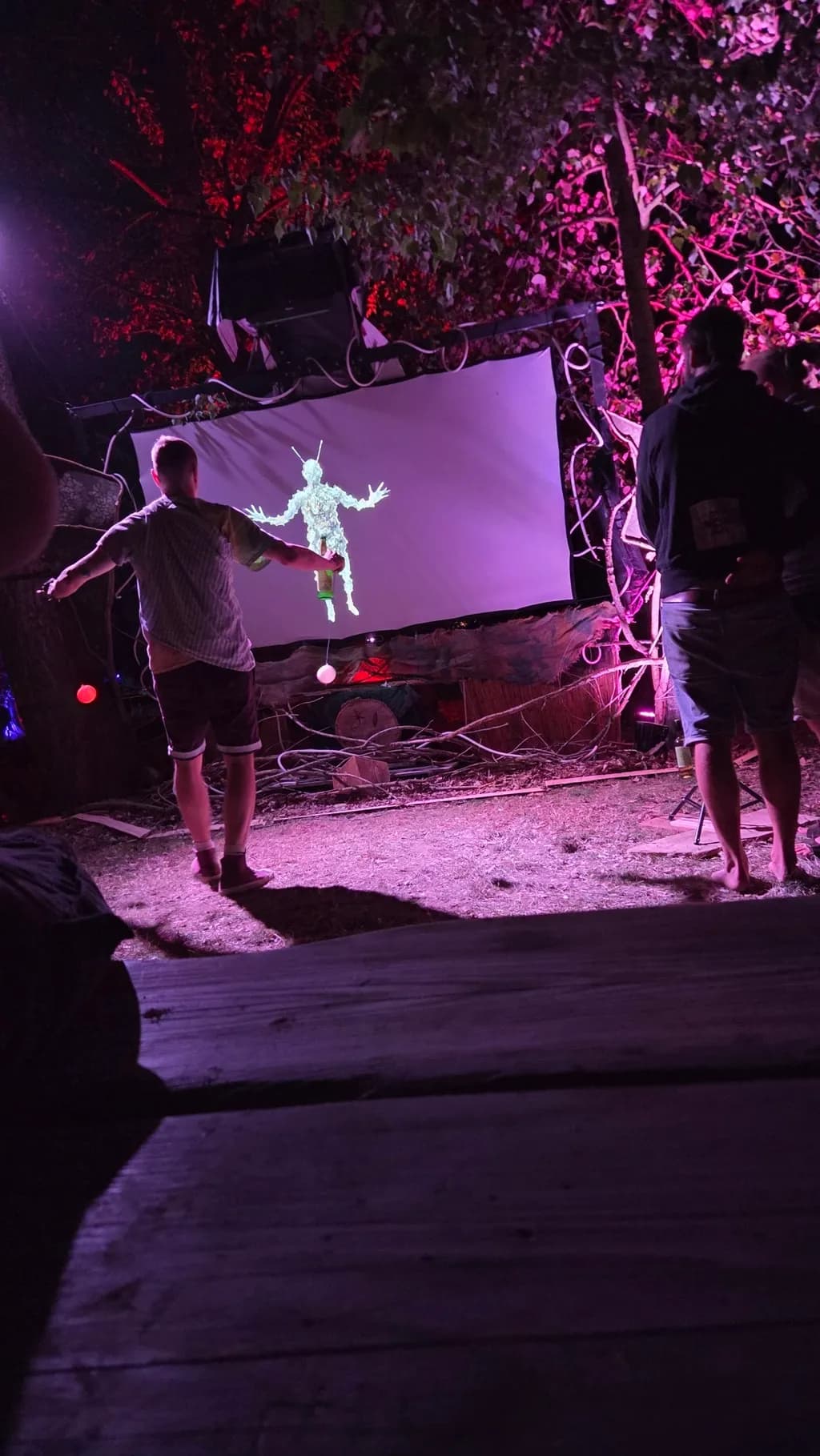
Alien Portal operates within a posthumanist imagination: it stages identity not as fixed but fluid—no longer exclusively human, but speculative, synthetic, and open.
The mirror doesn’t reflect a truth, but a multiplicity. Each visitor becomes a procedural organism, rendered in real time by generative models, shifting in response to movement, proximity, and gesture.
The experience is rooted in concepts like Umwelt and semiosphere: the idea that meaning and perception differ radically across species, intelligences, and systems. The alien forms seen in the portal are not random—they are synthetic responses, drawing from a machine’s logic, trained aesthetics, and procedural speculation. They are expressions from a nonhuman sign system.
Rather than mimicking the human, the system reimagines it. It suggests that perception itself may be shared, translated, or even invented—offering a playful, uncanny interface between body, machine, and imagined biology.
Visual Language
The portal interface draws from classic and mythic sci-fi:
- Spaceship-inspired UIs with telemetry, alien console texts, and species metadata
- Planetary backdrops and navigation sequences across fictional ecosystems
- Alien morphologies inspired by fungal, aquatic, crystalline, and post-organic forms
- A generative aesthetic blending biological logic with synthetic texture
Interaction Design
Visitors engage with the portal as with a sentient mirror:
- Motion capture and pose tracking influence the alien forms’ shape, animation, and behavior
- Onscreen UI reacts to position, generating planet transitions, “biometric” data, and organism classifications
- A navigation mode guides users through multiple planetary biomes, each with new alien variations
- The system responds fluidly—no menus, no instructions, just embodied play
Audience Response
Visitors tend to lose themselves. They dance, pose, interpret their alien avatars, laugh together. They collaborate with strangers to “inhabit” alien roles, point at others’ screens, invent names and backstories for what they’ve become. It’s a catalyst for wordless social play, reflection, and humor—without needing prior knowledge or instruction.
The mirror invites not recognition, but estrangement—a beautifully warped reflection that feels alive, curious, and deeply engaging. Participants often report a sense of self-rediscovery through the alien.